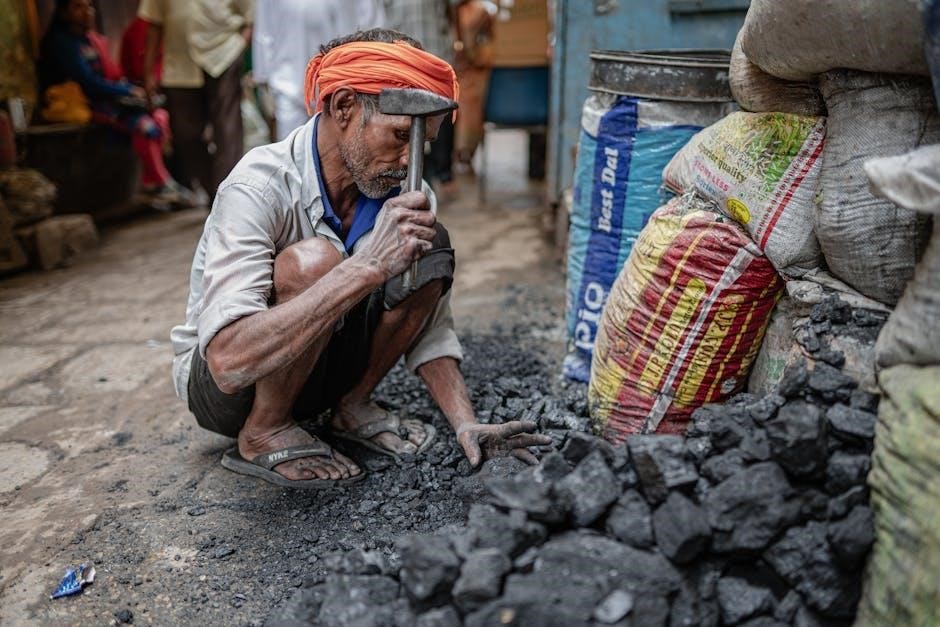
The Life and Labor of Manual Workers: A Comprehensive Overview

Navigating a vast digital landscape, accessing crucial documentation—owners manuals, service guides, and installation instructions—becomes paramount for those engaged in demanding physical roles.
Historical Context of Manual Labor
Throughout history, human civilization has fundamentally relied on manual labor, from the earliest agricultural societies to the construction of monumental structures. Initially, work was largely agrarian, demanding immense physical exertion. The advent of tools, though incremental, slowly eased burdens. Accessing historical records – like equipment operation manuals – reveals evolving techniques. Later, pre-industrial crafts flourished, requiring specialized skills. Understanding this evolution, documented in reference manuals and guides, is crucial for appreciating the present-day realities of physically demanding work.
The Evolution of Manual Work Through the Industrial Revolution
The Industrial Revolution dramatically reshaped manual labor, shifting production from homes to factories. While mechanization aimed to reduce physical strain, early factory conditions often intensified it, demanding repetitive, arduous tasks. Access to service manuals and technical white papers illustrates the rise of complex machinery. This era saw a decline in skilled craftsmanship, replaced by assembly-line work. Understanding these changes, documented in historical records, is vital for contextualizing modern labor practices and safety regulations.
Types of Manual Labor Occupations
Diverse roles define manual labor, from construction and agriculture to manufacturing and production. Operating equipment necessitates referencing detailed manuals – from SD28R-30 operators guides to Google Pixel user manuals – ensuring safe and efficient operation. These occupations often involve physically demanding tasks, requiring strength, stamina, and adherence to safety protocols; Navigating these roles demands access to resources like installation instructions and error prevention manuals.
Construction and Building Trades
This sector embodies physically strenuous work, demanding expertise in operating complex machinery. Access to equipment operation manuals, like those for the Intertek Controller, is crucial for safety and precision. From framing to finishing, workers rely on detailed guides – service manuals, installation instructions – to complete projects effectively. Proper training, referencing documentation, and adherence to standards are paramount in these demanding trades.
Agriculture and Farming
Agricultural labor necessitates resilience and practical skills, often involving long hours under challenging conditions. Operators manuals for equipment like the SD28R-30 are vital for maintaining machinery, ensuring efficient harvests. Troubleshooting guides, similar to the TM-C3500, aid in quick repairs, minimizing downtime. Access to reliable documentation supports productivity and safe operation in this essential industry.
Manufacturing and Production
Within manufacturing, precise operation and maintenance of complex machinery are crucial. Accessing equipment operation manuals, like those for the ET-2400 printer, ensures correct procedures. Service manuals and firmware updates maintain optimal performance. Troubleshooting guides, mirroring the Baofeng DM-32UV radio manual, minimize disruptions, supporting continuous production and upholding quality standards.

Physical Demands and Health Risks
Prolonged manual labor necessitates diligent attention to safety documentation. Understanding equipment manuals, similar to those found on ManualsLib, is vital for hazard prevention. Frequent access to error prevention manuals and support lists can mitigate risks. Prioritizing adherence to safety procedures, detailed in guides, protects workers from potential injuries during demanding tasks.
Musculoskeletal Disorders (MSDs) in Manual Workers

Consistent reference to equipment operation manuals is crucial for proper technique. Ignoring instructions, like those for the Baofeng DM-32UV radio, can exacerbate strain. Detailed guides, similar to the Google Pixel user manual, emphasize ergonomic practices. Proactive use of support lists and troubleshooting guides minimizes repetitive stress, reducing MSD incidence.
Respiratory Issues and Exposure to Hazards
Accessing firmware updates and technical white papers aids hazard identification. Like referencing the ET-2400 printer’s quick installation guide, understanding safety procedures is vital. Error prevention manuals, alongside network manuals, detail protective measures. Proper ventilation, detailed in supplementary manuals, minimizes exposure, safeguarding worker health and preventing respiratory complications.
Safety Regulations and Protective Measures
Detailed equipment operation manuals, like those for the SD29VB5R, are foundational. Referencing Intertek controller manuals ensures compliance. OSHA standards, mirrored in service manuals, dictate protective equipment (PPE) usage. Navigation manuals highlight emergency procedures. Prioritizing safety, akin to a Google Pixel user manual’s guidance, minimizes risks and fosters a secure work environment.
OSHA Standards for Workplace Safety
Adherence to OSHA guidelines, detailed in comprehensive service manuals, is critical. Like the Baofeng DM-32UV operating manual’s focus on proper radio use, OSHA emphasizes hazard communication and control. Regular equipment checks, referencing installation guides, are vital. Proper training, mirroring firmware updates, ensures workers understand and implement safety protocols, minimizing workplace incidents.
Personal Protective Equipment (PPE)
Just as a Google Pixel user manual details device care, PPE safeguards manual laborers. Essential gear—helmets, gloves, safety glasses—parallels the detailed instructions within equipment operation manuals. Proper fit and maintenance, like troubleshooting guides for printers (ET-2400, ET-2850), are crucial. Consistent PPE use minimizes injury, mirroring the preventative measures outlined in error prevention manuals.
The Impact of Technology on Manual Labor
Similar to firmware updates enhancing device functionality, technology reshapes manual work. While automation, like advanced robotics, presents job displacement concerns, tools and equipment— mirroring detailed installation manuals—augment capabilities. Accessing support lists and technical white papers becomes vital for skill adaptation. This parallels navigating complex manuals like the Baofeng DM-32UV operating guide, demanding continuous learning.
Automation and Job Displacement
The rise of robotics, akin to software installation procedures, introduces anxieties regarding job security for manual laborers. While some roles become obsolete, mirroring outdated manuals, new opportunities emerge requiring technical proficiency. Understanding device operation—like the SD28R-30—becomes crucial. Navigating this shift demands proactive skill development, similar to accessing Google Pixel user manuals for adaptation.
Tools and Equipment Enhancing Manual Work
Modern tools, much like detailed Intertek Controller manuals, significantly augment a worker’s capabilities. From advanced machinery to specialized hand tools, these innovations boost efficiency and reduce physical strain. Proper understanding—akin to Baofeng DM-32UV operation—is vital. Accessing equipment operation manuals ensures safe and effective utilization, improving productivity and overall work quality.

Socioeconomic Factors Affecting Manual Workers
Manual laborers often face wage stagnation despite demanding work, contributing to income inequality. Access to comprehensive healthcare and benefits, like those detailed in Google Pixel user manuals for support, remains a significant challenge. Navigating these socioeconomic hurdles requires resources and advocacy, mirroring the need for clear documentation in complex systems.
Wage Levels and Income Inequality
Despite contributing significantly to economic output, manual workers frequently experience suppressed wage growth, exacerbating income disparities. This contrasts sharply with the detailed specifications found in equipment operation manuals, highlighting a systemic undervaluation. Accessing support lists and firmwares, like those for Baofeng radios, doesn’t equate to fair compensation for strenuous labor.
Access to Healthcare and Benefits
Often lacking comprehensive health insurance and retirement plans, manual laborers face significant vulnerabilities. Searching for error prevention manuals or network guides doesn’t address these critical needs. The availability of Google Pixel user manuals contrasts with the limited benefits offered to those performing physically demanding jobs, creating substantial inequities in well-being.

The Psychological Impact of Demanding Physical Work
The relentless physical strain inherent in manual labor frequently leads to chronic stress, fatigue, and diminished mental health. While readily available are SD29VB5R operators manuals, resources addressing the psychological toll are scarce. This disparity highlights a critical gap, as navigating firmware updates pales compared to managing work-related emotional burdens.
Stress, Fatigue, and Mental Health
Prolonged exertion, akin to troubleshooting a TM-C3500, generates significant stress and fatigue in manual laborers. Accessing a Google Pixel user manual offers little solace against persistent physical exhaustion. This constant demand can escalate into anxiety, depression, and burnout, requiring support beyond simply finding an ET-2850 quick installation guide.
Training and Skill Development for Manual Labor
Just as mastering a Baofeng DM-32UV requires diligent study of its operating manual, skilled manual work demands continuous training. Apprenticeships, mirroring the detailed steps in an SD29VB5R operator’s manual, provide foundational knowledge. Further development, like firmware updates, ensures competency and safety, boosting career prospects beyond basic equipment operation.
Apprenticeships and Vocational Programs
Similar to referencing a Google Pixel user manual for optimal device function, apprenticeships offer structured learning for manual trades. Vocational programs, akin to installation guides for an ET-2400 printer, provide hands-on experience. These pathways cultivate expertise, mirroring the detailed knowledge needed for complex tasks, and fostering a skilled workforce.
On-the-Job Training and Certification
Just as a Baofeng DM-32UV operating manual details radio functionality, on-the-job training imparts practical skills. Certification, like a firmware update for optimal performance, validates competency. This direct learning, mirroring accessing support lists, builds proficiency. It’s essential for safely operating equipment and adhering to standards, ensuring quality work.
The Future of Manual Labor
Like navigating manuals for an ET-2400 printer, manual workers must adapt to evolving technology. Robotics and AI present both challenges and opportunities, demanding upskilling. While automation may displace some roles, demand for skilled trades persists. Continuous learning, akin to firmware updates, will be crucial for sustained relevance and career advancement.
The Role of Robotics and Artificial Intelligence
Similar to accessing a Baofeng DM-32UV operating manual for troubleshooting, workers face a new “machine” to understand. AI and robotics are poised to automate repetitive tasks, impacting manual labor. However, these technologies also create demand for skilled technicians to maintain and program them, requiring adaptation and new skillsets.
Demand for Skilled Trades in a Changing Economy
Despite automation, a robust demand persists for skilled trades – much like needing a Google Pixel user manual for complex features. Expertise in construction, maintenance, and specialized manufacturing remains vital. This demand necessitates robust training programs, mirroring the need for detailed equipment operation manuals, ensuring a qualified workforce.
Legal Rights and Worker Protections
Manual laborers possess crucial legal safeguards, akin to referencing a Baofeng DM-32UV operating manual for proper device use. These include rights to safe working conditions, fair wages, and protection against discrimination. Unionization and collective bargaining empower workers, while workers’ compensation offers recourse for injuries, mirroring support lists for troubleshooting.
Unionization and Collective Bargaining
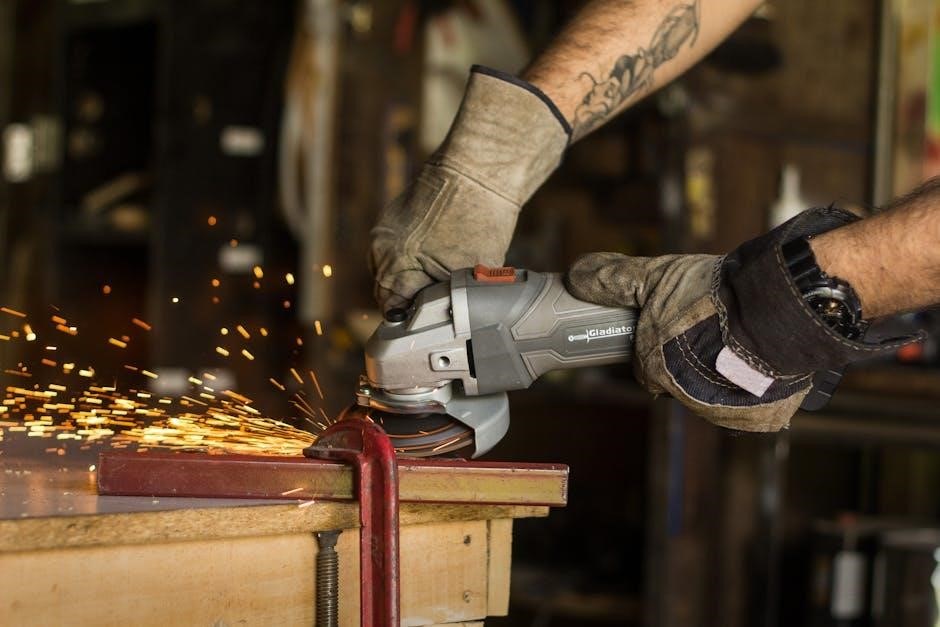
Like accessing a detailed Google Pixel user manual, unionization provides manual laborers with a structured framework for advocating their rights. Collective bargaining empowers them to negotiate wages, benefits, and safety standards—essential protections often mirroring the clarity found in equipment operation manuals. This process fosters a stronger, more equitable workplace.
Workers’ Compensation and Injury Claims
Similar to referencing a troubleshooting guide for a TM-C3500 printer, workers’ compensation offers crucial support when manual labor leads to injury. Filing claims, navigating procedures – akin to a software installation manual – ensures access to medical care and wage replacement, vital for recovery and financial stability during challenging times.
Global Perspectives on Manual Labor
Just as diverse manuals cater to varied equipment like the Baofeng DM-32UV radio, global manual labor conditions differ drastically. Examining practices in developing countries reveals disparities in safety, wages, and rights, mirroring the need for standardized documentation. Ethical labor and fair trade initiatives aim to elevate standards worldwide, promoting dignity and protection.
Conditions in Developing Countries
Similar to accessing a Google Pixel user manual for guidance, workers in developing nations often lack essential protections and resources. Exploitation, hazardous environments, and minimal wages are prevalent, demanding urgent intervention. The absence of robust safety regulations and access to documentation mirrors a critical need for improved labor standards and worker empowerment.
Fair Trade and Ethical Labor Practices
Just as detailed equipment operation manuals ensure safe usage, fair trade prioritizes worker well-being. Ethical practices demand living wages, safe working conditions, and respect for labor rights, mirroring the clarity found in Intertek Controller manuals. Supporting fair trade initiatives fosters a system valuing human dignity and sustainable development for all manual laborers.
The Importance of Recognizing and Valuing Manual Work
Similar to accessing a comprehensive service manual for complex machinery, recognizing manual labor’s value requires understanding its essential contribution. Challenging societal perceptions and promoting respect for skilled trades—like those detailed in Baofeng DM-32UV operating manuals—is crucial. Valuing these roles acknowledges the dedication and expertise involved, fostering a more equitable society.
Challenging Societal Perceptions
Just as detailed equipment operation manuals highlight precision, dismantling the notion that manual work is ‘lesser’ demands a shift in perspective. We must actively counter biases, recognizing the intellectual and physical skill involved – akin to troubleshooting with a Google Pixel user manual. Elevating these professions fosters respect and attracts future generations.
Promoting Respect for Skilled Trades
Similar to accessing a Baofeng DM-32UV operating manual for reliable communication, skilled trades provide essential services underpinning our society. Investing in vocational programs, apprenticeships, and showcasing successful career paths – like featured manuals – builds appreciation. Recognizing the value of tangible creation fosters a culture valuing expertise and dedication.
Resources for Manual Workers
Just as a Google Pixel user manual offers support, numerous resources aid manual laborers. Government agencies provide training and support, while organizations champion worker rights – mirroring the detailed guides available online. Accessing these, like ET-2400 printer guides, empowers individuals with vital information regarding safety, legal protections, and career advancement opportunities.
Government Agencies and Support Programs
Similar to finding a Baofeng DM-32UV operating manual, government resources offer crucial support. Agencies provide safety training, mirroring detailed equipment guides like those for SD28R-30 operators. Programs assist with skill development, mirroring firmware updates, and offer financial aid, ensuring manual workers have access to vital tools for success and well-being.
Organizations Advocating for Workers’ Rights

Just as a Google Pixel user manual clarifies device functionality, these organizations illuminate worker protections. They champion fair wages, mirroring the detailed specifications in an owners manual, and safe conditions, akin to Intertek Controller guides. These groups provide legal assistance and advocate for policies, ensuring dignity and respect for all manual laborers.
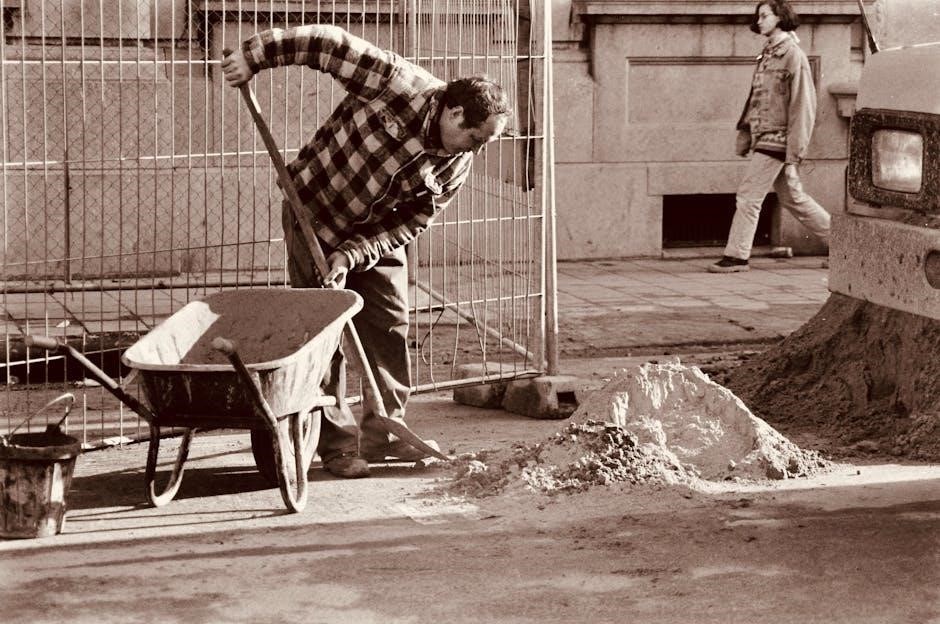
Manuals and Documentation Relevant to Manual Labor
Similar to accessing a Baofeng DM-32UV operating manual for radio functionality, comprehensive documentation is vital for safe and efficient manual work. This includes equipment operation guides, mirroring the ET-2400 printer quick installation, and detailed safety procedure manuals, ensuring workers understand protocols and minimize risks, much like firmware updates.
Equipment Operation Manuals
Just as the SD28R-30 operators manual details precise machine function, these guides are essential for manual laborers. They provide step-by-step instructions, mirroring the Google Pixel user manual’s clarity, ensuring correct usage, preventing damage, and maximizing efficiency. Proper operation, like a TM-C3500 troubleshooting guide, minimizes errors and boosts productivity.
Safety Procedure Guides
Similar to error prevention manuals, comprehensive safety guides are vital for manual workers facing inherent risks. These documents, akin to the Intertek Controller manuals, outline protocols for hazard avoidance, proper PPE usage, and emergency responses. Following these procedures—like those in a firmware update—protects individuals, mirroring the detailed instructions found in installation guides.
Case Studies of Successful Manual Workers
Highlighting career paths, much like referencing a Google Pixel user manual for optimal function, showcases dedication. Examining individuals who’ve mastered skilled trades—from construction to manufacturing—demonstrates achievable success. Their journeys, documented like a service manual, reveal the value of continuous learning and adaptation, proving hard work yields rewarding outcomes.

Highlighting Career Paths and Achievements
Similar to following an equipment operation manual, dedicated workers build expertise. From apprenticeships to mastering complex machinery – like the Baofeng DM-32UV radio – their paths demonstrate resilience. Achievements aren’t merely task completion, but problem-solving, leadership, and consistent skill refinement, mirroring detailed documentation’s precision.